
Brother Lawrence and the Nine Steps He Never Meant to Teach
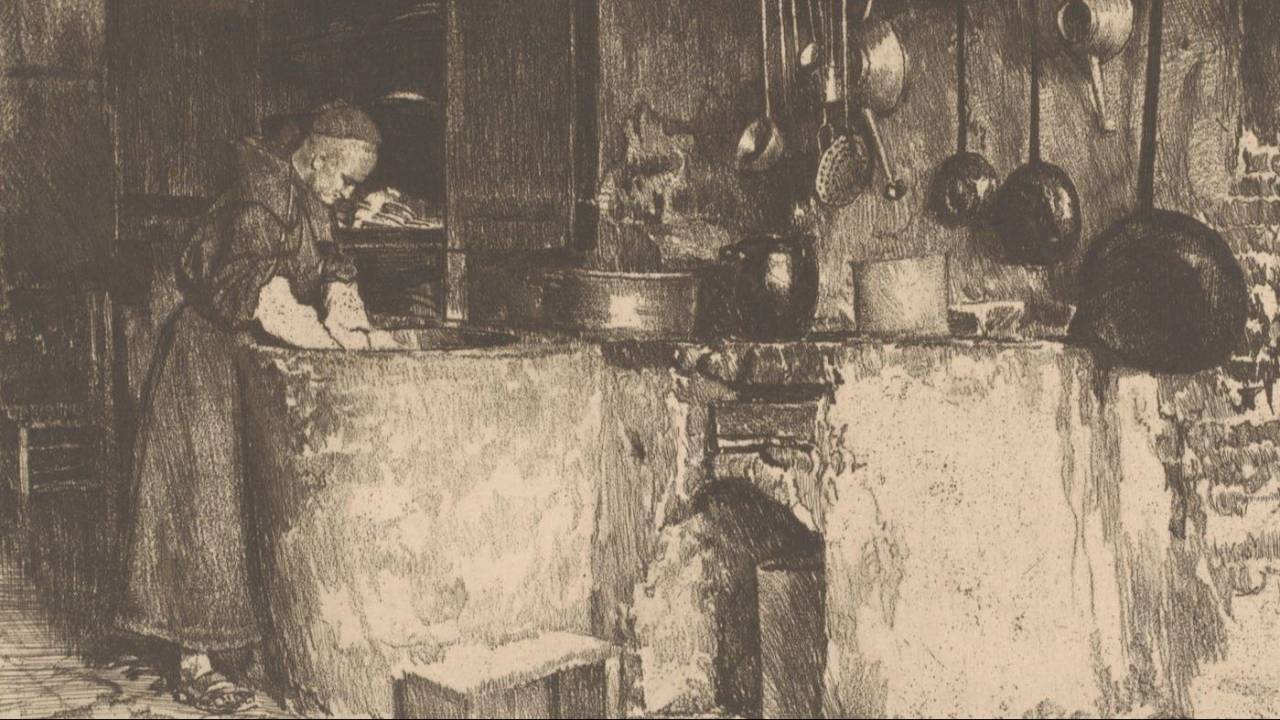
He never wrote a book. He sought no disciples. He spent most of his adult life in a monastery kitchen in seventeenth-century Paris, scrubbing pots and turning omelettes in a pan. And yet within his lifetime, people traveled from across France to sit with him — church leaders and common people alike — because something in his presence could not be explained and could not be ignored.
His name was Brother Lawrence. And if you want to understand what a life genuinely formed by God actually looks like, his is one of the most instructive examples in the history of the church.
What follows is not what he prescribed. It is what he did — drawn from his letters and the accounts of those who knew him. Nine steps he never meant to teach, because he never thought of them as steps at all. He simply lived them.
1. A Single, Shattering Vision of God
It began not in a chapel but in winter, with a bare tree.
As a young soldier, Lawrence looked at a leafless tree and understood — really understood — that within weeks it would be covered in leaves, flowers, and fruit. In that unremarkable moment the providence and power of God struck him with such force that he said it never left his soul for the remaining forty years of his life.
Formation for Lawrence did not begin with a program or a method. It began with a revelation he could not unfeel. Before anything else, he saw who God is. Everything that followed was a response to that vision.
2. A Decision of Total Surrender — Made Once
Upon entering the monastery, Lawrence made a single, unreserved decision: to give himself to God entirely — as satisfaction for his sins and as the organizing principle of his entire life. To do nothing, say nothing, and think nothing except for the love of God.
He did not remake this decision daily in the way we think of daily recommitment. He made it once, profoundly, and then lived the rest of his life as the working out of that one decision. This is closer to Paul's language in Romans 12:1 — the living sacrifice offered once — than to modern renewal culture's cycle of repeated rededication.
3. Ruthless Rejection of All Methods Except Love
Lawrence tried the conventional spiritual methods of his day — set prayers, formal meditations, structured devotions. He found they discouraged him. So he abandoned them.
Not out of laziness. Out of discernment. He concluded that the shortest way to God was a continual exercise of love, and that all methods are only useful insofar as they lead to union with God. When they ceased to serve that end, he dropped them without guilt.
For a seventeenth century monk, this was a remarkably bold move. And it points to something important: spiritual formation is not ultimately about technique. It is about love.
4. Training the Attention — Minute by Minute
Having abandoned formal methods, Lawrence turned to a single practice: keeping his attention on God. Every hour. Every minute. Even at the height of his work in the kitchen.
He wrote: "At all times, every hour, every minute, even at my busiest times, I drove away from my mind everything that was capable of interrupting my thought of God."
He was honest that this caused him great pain in the beginning. The attention wandered constantly. But he simply, quietly, brought it back — without disquiet, without self-condemnation, without drama. This is the practice of the presence of God reduced to its most essential form: attention trained over years.
5. Non-Condemnation of His Own Failures
This step is easily overlooked. It may be the most practically significant of all.
When his attention wandered — and it did, constantly, especially in the early years — Lawrence refused to make it worse by berating himself. He thanked God for waiting for him and returned. He explicitly warned others against the spiritual damage done by excessive self-reproach after failure.
Formation for Lawrence required a settled, non-anxious relationship with his own imperfection. He understood something that Paul declares in Romans 8:1 and that many of us have never truly received: there is now no condemnation. Not as a theological proposition to be affirmed, but as a lived reality to be inhabited.
6. The Transformation of Ordinary Work into Prayer
Lawrence did not separate his kitchen work from his spiritual life. He turned his omelette in the pan for the love of God. He scrubbed dishes for the love of God. He worked among the noise and clatter of a busy kitchen and found God there as surely as in the chapel.
He wrote: "The time of business does not differ with me from the time of prayer; and in the noise and clatter of my kitchen, while several persons are at the same time calling for different things, I possess God in as great tranquility as if I were upon my knees at the blessed sacrament."
This was not a nice idea. It was a tested and verified reality, confirmed over fifteen years of kitchen work he had initially found deeply repugnant. The sacred and the ordinary had ceased to be separate categories.
7. Saturation Over Time Producing Effortless Presence
After years — decades — of this practice, Lawrence arrived at a place where the presence of God was no longer something he had to reach for. It was simply where he lived. He described his soul as having been with God for nearly thirty years without interruption.
The practice had become nature. The discipline had become desire. The effort had become rest. What began as painful, daily training had become what he called holy inactivity — a state of being so habitually oriented toward God that the soul rested in him the way a stone rests on the ground.
This is what saturation looks like over a lifetime. Not perfection. Not sinlessness. But a person so thoroughly formed by sustained communion with God that the presence had permeated every part of him.
8. Hiddenness and Concealment of Interior Joy
As Lawrence's interior life deepened, the raptures became so great that he had to moderate and conceal them from others. He was not building a platform. He was not cultivating a following. He was quietly, almost invisibly, becoming what God intended him to be.
This is formation moving away from display and toward depth — precisely the opposite trajectory of much contemporary spirituality. The deeper he went, the less he needed to show. The more God filled him, the less room there was for performance.
9. Becoming a Resource for Others Without Seeking It
Lawrence never sought disciples. He answered letters reluctantly and only because people pressed him. He shared his secret method with great hesitation, asking that his letters not be shown to others.
And yet people came from across France to sit with him. His formation produced a gravity that others felt without him advertising it. The fruit was a quiet, relational influence that cost him nothing — because it came from what he was, not what he performed.
This is perhaps the most searching challenge his life presents to us. The people we most need to become are rarely the people most eager to be seen.
A Word for Those of Us Still in the Kitchen
Brother Lawrence spent fifteen years doing work he found repugnant before he found God fully present in it. He spent years in painful, imperfect practice before the presence became effortless. He was not a spiritual prodigy. He was a man who made one unreserved decision and then kept returning — every hour, every minute — until the returning became home.
That is available to every one of us. Not as a program. Not as a method. As a decision, made once and lived out in a thousand ordinary moments, until the ordinary moments become the place where God is already very much at home.